Technical Training: A Delivery of Standards
On the afternoon of April 13, 2026, in the conference room of Zone E at the Shinva Medical Technology Park, nearly 40 overseas engineers had just concluded their morning factory tour, and an intensive technical training session was about to begin. “Over the next five days, we will conduct systematic training centered on six categories of core equipment,” said Liu Xiao, Director of After-Sales Service at Shinva Medical’s International Trade Department, in a concise and forceful opening statement. “Theoretical learning, hands-on practice, and certification assessments—none of these can be omitted.” This was not a simple product presentation, but a delivery of “standards.”
Infection Control Equipment Training: From Principles to Practical Application
This training focused on six major infection control devices: MAST, UCD, Plasma, Most, Rapid, and Rider, covering the entire process from instrument washing and disinfection to sterilization. During the theoretical training, instructors began with the principles of the equipment, providing detailed explanations of chamber structures, workflows, and temperature-pressure curve changes. A closed-book assessment followed immediately after the training for each type of equipment.
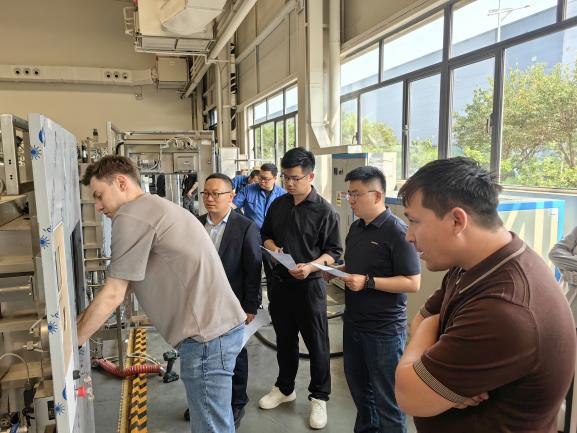
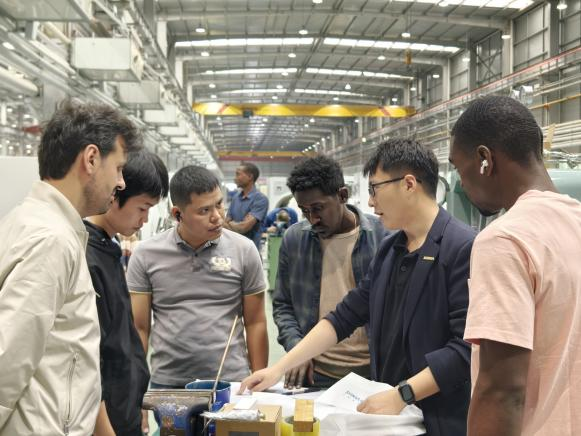
Hands-on practice took place in the infection control workshop at the International Trade Center. Two demonstration units were provided for each type of equipment. Instructors first conducted a group demonstration covering equipment startup, parameter settings, fault simulation, and troubleshooting approaches, followed by group practice sessions for the trainees. The assessment utilized a random draw system, where trainees performed live operations while verbally explaining their troubleshooting logic. Evaluators scored participants based on three criteria: operational compliance, troubleshooting logic, and verbal communication.
Operating Room Product Training: Concise and Precise
Although operating room product training constitutes a smaller portion of the program, it is equally packed with practical knowledge. The curriculum covers the basic principles, operating parameters, and key maintenance points of operating room equipment. Instructors from the Operating Room Technology Plant guide trainees through core products such as surgical lights and operating tables, laying the foundation for future service work.
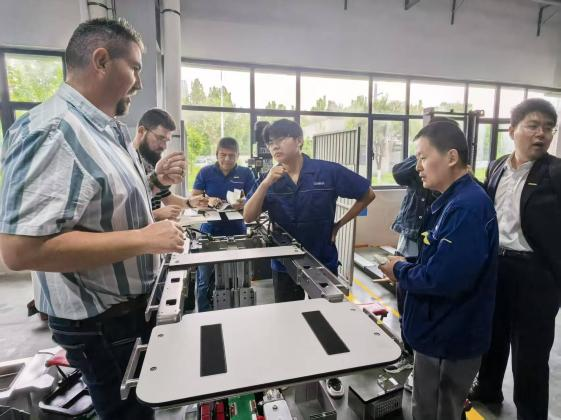
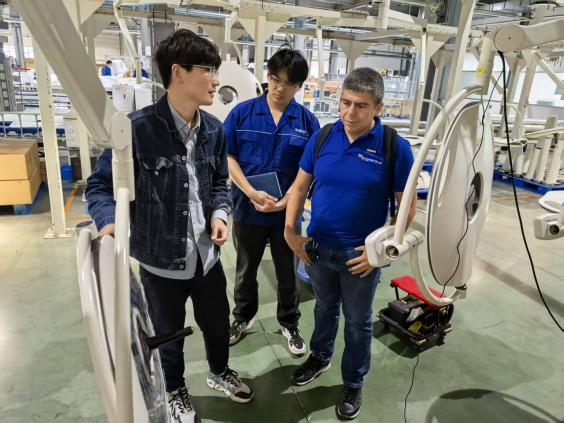
A Successful Conclusion: Certificate Ceremony Marks Growth
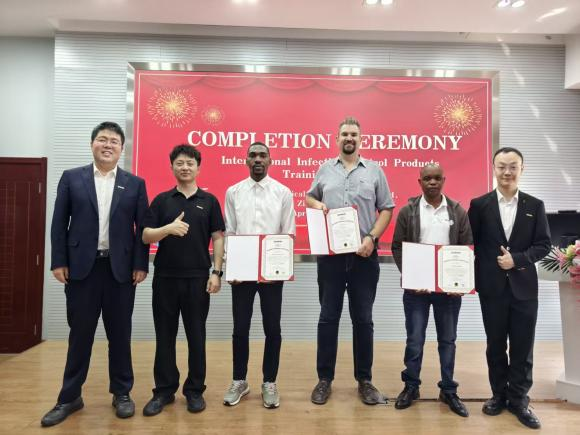
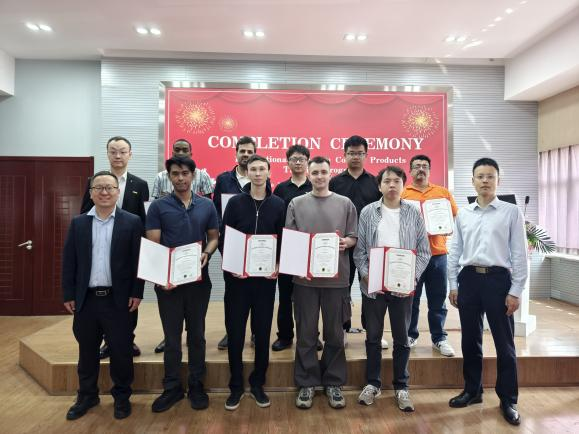
The five-day training concluded successfully with a certificate ceremony. The final score was calculated as a weighted average of the written theory exam (40%) and the practical assessment (60%), with scores of 90 or above deemed excellent and 70 or above considered passing. The assessment results showed that the trainees performed exceptionally well overall, with all meeting the passing standard and several receiving certificates of excellence. “This is not a one-time training program,” Liu Xiao stated in his closing remarks. “The training materials, assessment criteria, and practical procedures from this session will be preserved and serve as standardized templates for future overseas training programs.”
From exporting products to exporting standards; from selling equipment to building systems. The global competitiveness of Chinese medical device companies is undergoing a comprehensive upgrade, shifting from price and product advantages to standard and service advantages. When these engineers return to their respective countries with Shinva Medical’s “standards,” they will convey not only technology but also a commitment to quality.